Two new apprentice candidates and a new apprentice program highlighted a toast to National Apprenticeship Week at the Regional Center for Advanced Manufacturing (RCAM) in Kingsport on November 16.
Northeast State Community College welcomed a capacity crowd of friends and partners to RCAM for a National Apprenticeship Week open house event. Held annually during the second week of November, National Apprenticeship Week highlights how apprenticeship programs prepare American workers for jobs today and in the future.
“It is our job to connect people with prosperity,” said Northeast State President Dr. Jeff McCord. “Whether that is the prosperity of finances, the prosperity of knowledge, or the prosperity of growing and becoming the best they can be.”
McCord noted how the apprenticeship model’s genesis began. In 2017, Northeast State staff including McCord worked with the U.S. Department of Labor Office of Apprenticeship to create the apprentice program at the College. That collaboration created the first such apprenticeship program at a postsecondary education institution in Tennessee. The model grew into a statewide program partnering higher education institutions with organizations of all stripes.
Dakota Brickey and Jerry Weddle, of the Primester company in Kingsport, signed their apprenticeship agreements with Northeast State at the event. Brickey and Weddle entered the mechatronics apprenticeship pathway. Other apprenticeship occupational tracks available industrial manufacturing technician; carpentry; CNC machinist; and metal buildings.
Northeast State staff welcomed representatives from regional partners with apprentice students and graduates including Eastman; Silgan Closures; Bell Helicopter; Primester; and Networks Sullivan Partnership. These representatives spoke at length about how the apprenticeship program changed the lives of their workers and their workplace.
“That is the common calling with everyone in this room – to serve our students not just on an apprenticeship but in any form of instruction,” said Blake Montgomery, executive director, Economic and Workforce Development at RCAM. “I’m sure that commitment will continue as we explore new apprenticeships and new types of training as we go forward.”
In addition to the apprentices, Northeast State announced a new apprenticeship model created for paraprofessionals in education. Dr. Nathan Weber announced the new apprenticeship forged with Carter County and Johnson County school systems. The new model creates a pathway for teacher aides to earn an associate degree at Northeast State and continue on to a four-year institution to complete a bachelor’s degree.
“We realized there were a large number of paraprofessionals who could not return to college because they were working full time,” said Weber. “What the apprenticeship allows them to do is continue to work their job, get on the job training hours and allow us to fit in a college schedule for them.”
According to a U.S. Department of Education report for the 2023-2024 school year, Tennessee’s pre-K, kindergarten, and K-12 grades reported teacher shortages in the areas of mathematics, social studies, English, science, and art/music education.
As a DOL registered apprenticeship sponsor, RCAM can create training curricula specific to companies of any size. When completing all courses and on-the-job training hours, apprentices receive a DOL certificate of completion. Each apprentice candidate completing a sponsored apprenticeship earns a DOL certificate of completion. As the apprenticeship sponsor, RCAM provides the academic structure and training processes for employers.
As the apprenticeship sponsor, RCAM provides the structure and processes for employers to take advantage of this proven workforce development model. The apprenticeship occupational tracks including Mechatronics, Industrial Manufacturing, and others developed upon request.
Apprenticeships allow employers to develop and train their future workforce with the skills specific to their organizational needs. Communities benefit from these apprenticeships as it provides the best implementation of a public-private partnership by improving the workforce; supporting local employers; and changing the economic trajectory of households in Tennessee.
“There is no way our progress could have been made without partnerships,” said Dr. McCord, of the apprenticeship model. “We are very excited to celebrate the apprenticeship model because it means something to us.”

Two new apprentice candidates and a new apprentice program highlighted a toast to National Apprenticeship Week at the Regional Center for Advanced Manufacturing (RCAM) in Kingsport on November 16.
Northeast State Community College welcomed a capacity crowd of friends and partners to RCAM for a National Apprenticeship Week open house event. Held annually during the second week of November, National Apprenticeship Week highlights how apprenticeship programs prepare American workers for jobs today and in the future.
“It is our job to connect people with prosperity,” said Northeast State President Dr. Jeff McCord. “Whether that is the prosperity of finances, the prosperity of knowledge, or the prosperity of growing and becoming the best they can be.”
McCord noted how the apprenticeship model’s genesis began. In 2017, Northeast State staff including McCord worked with the U.S. Department of Labor Office of Apprenticeship to create the apprentice program at the College. That collaboration created the first such apprenticeship program at a postsecondary education institution in Tennessee. The model grew into a statewide program partnering higher education institutions with organizations of all stripes.
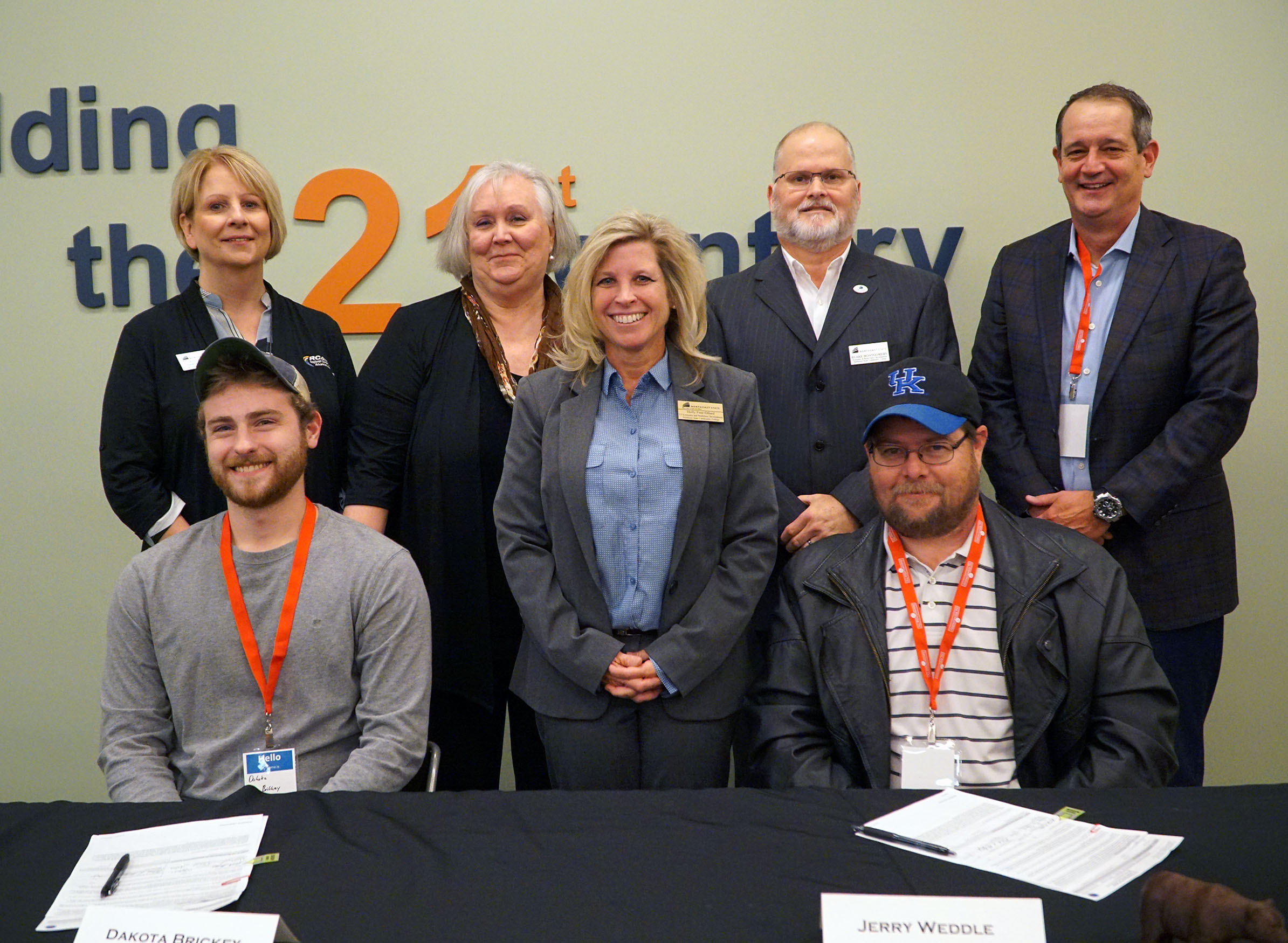
Dakota Brickey and Jerry Weddle, of the Primester company in Kingsport, signed their apprenticeship agreements with Northeast State at the event. Brickey and Weddle entered the mechatronics apprenticeship pathway. Other apprenticeship occupational tracks available industrial manufacturing technician; carpentry; CNC machinist; and metal buildings.
Northeast State staff welcomed representatives from regional partners with apprentice students and graduates including Eastman; Silgan Closures; Bell Helicopter; Primester; and Networks Sullivan Partnership. These representatives spoke at length about how the apprenticeship program changed the lives of their workers and their workplace.
“That is the common calling with everyone in this room – to serve our students not just on an apprenticeship but in any form of instruction,” said Blake Montgomery, executive director, Economic and Workforce Development at RCAM. “I’m sure that commitment will continue as we explore new apprenticeships and new types of training as we go forward.”
In addition to the apprentices, Northeast State announced a new apprenticeship model created for paraprofessionals in education. Dr. Nathan Weber announced the new apprenticeship forged with Carter County and Johnson County school systems. The new model creates a pathway for teacher aides to earn an associate degree at Northeast State and continue on to a four-year institution to complete a bachelor’s degree.
“We realized there were a large number of paraprofessionals who could not return to college because they were working full time,” said Weber. “What the apprenticeship allows them to do is continue to work their job, get on the job training hours and allow us to fit in a college schedule for them.”
According to a U.S. Department of Education report for the 2023-2024 school year, Tennessee’s pre-K, kindergarten, and K-12 grades reported teacher shortages in the areas of mathematics, social studies, English, science, and art/music education.
As a DOL registered apprenticeship sponsor, RCAM can create training curricula specific to companies of any size. When completing all courses and on-the-job training hours, apprentices receive a DOL certificate of completion. Each apprentice candidate completing a sponsored apprenticeship earns a DOL certificate of completion. As the apprenticeship sponsor, RCAM provides the academic structure and training processes for employers.
As the apprenticeship sponsor, RCAM provides the structure and processes for employers to take advantage of this proven workforce development model. The apprenticeship occupational tracks including Mechatronics, Industrial Manufacturing, and others developed upon request.
Apprenticeships allow employers to develop and train their future workforce with the skills specific to their organizational needs. Communities benefit from these apprenticeships as it provides the best implementation of a public-private partnership by improving the workforce; supporting local employers; and changing the economic trajectory of households in Tennessee.
“There is no way our progress could have been made without partnerships,” said Dr. McCord, of the apprenticeship model. “We are very excited to celebrate the apprenticeship model because it means something to us.”
Share this:
Like this: