Northeast State passed an impressive milestone this spring with 100 apprentices now registered through the Regional Center for Advanced Manufacturing.
“This model invests in employees by providing an opportunity for upskilling with a progressive wage,” said Holly Free-Ollard, Vice President of Economic and Workforce Development at Northeast State. “In turn, the benefit for the company is retaining employees.”
Northeast State worked with the U.S. Department of Labor (DOL) Office of Apprenticeship to establish the Registered Apprenticeship program in 2017. The apprenticeship program unites the College’s technical education resources with regional economic development.
As the apprenticeship sponsor, RCAM provides the academic structure and training processes for employers to take advantage of this workforce development model. The partners include the following regional companies and organizations:
Bell
Bristol City Schools
CAM Industrial LLC
Cardinal Glass FG
Carter County Schools
ebm-papst Inc.
Fiber Innovation Technology
GRC
HDK Industries, Inc.
JA Street
Johnson County Schools
LeClerc Foods Inc.
Cerdia (formerly Primester)
Seaman Corporation
Silgan Closures
SKF
Snap-on
State of Franklin Healthcare Associates
the Robinette Company
Holston Medical Group PC
GSM Engineered Fabrics
The apprenticeship model uses a flexible hands-on-training structure. Apprentice candidates have a current job at a partnering organization. Those candidates are paid for learning a new skill set or an advanced skills set.
Donna Tate, senior human resources manager with the Seaman Corporation, praised RCAM staff and instructors for their dedication to meet the company’s needs in a variety of training fields.
“In the economy that we have today, it’s very beneficial to have technical training to help support the businesses and manufacturers we have in the region,” said Tate. “RCAM has been so beneficial; they meet your needs and work with you to create the training programs needed to support businesses throughout the region.”
The apprenticeship models are as diverse as the companies with whom Northeast State serves. Apprentices have entered learning pathways including mechatronics (a combination of electrical and mechanical technology); mechanical maintenance; carpentry; CNC machining; metal buildings; project management; maintenance technician; clinical certified medical assistant; teacher aide; lithographic press operator.
Occupations scheduled to be added are fiber optic technician, maintenance technician, phlebotomy, and logistics specialist. All registered apprenticeship programs and occupations must be approved through Tennessee Office of Apprenticeship and/or the U.S. Department of Labor.
As the apprenticeship sponsor, RCAM provides the academic structure and training processes for employers. When completing all courses and on-the-job training hours, apprentices receive a DOL certificate of completion.
Joseph Oliver, of the Seaman Corporation, explained how RCAM faculty provided apprentices with the technical knowledge they carried over into their on-the-job training experiences.
“You’re gaining a skill set attending RCAM and gaining knowledge from technicians and people who have been in the field,” said Oliver, “They’re giving insight and a personal angle into how to go about certain jobs and troubleshoot.”
Apprentices develop a thorough knowledge base in their field. Apprenticeships often provide opportunities for networking and building relationships within the industry, which can be invaluable for future career growth.
Oliver noted the small class sizes and camaraderie built with fellow apprentices were effective components of the learning process. A Seaman associate for more than 17 years, he encouraged individuals to pursue the apprenticeship pathway to maximize their career opportunities.
“Take that leap, get acquainted, and know what your options are,” he said. “The only thing standing in the way is you.”
(From top) James Osborne, director of Safety & Quality at J.A. Street, with new apprentices Lucas Griggs and
Mason Sizemore.
Snap-on Tools Elizabethton recently celebrated Tommy Lane’s (seated) apprenticeship signing with Northeast State.
New apprentices from Primester sign their contracts. (Seated from left, Dakota Brickey and Jerry Weddle). Northeast State staff (from left) Jo Starling, Cindy Necessary, Dr. Holly Free-Ollard, Blake Montgomery, and Dr. Jeff McCord.
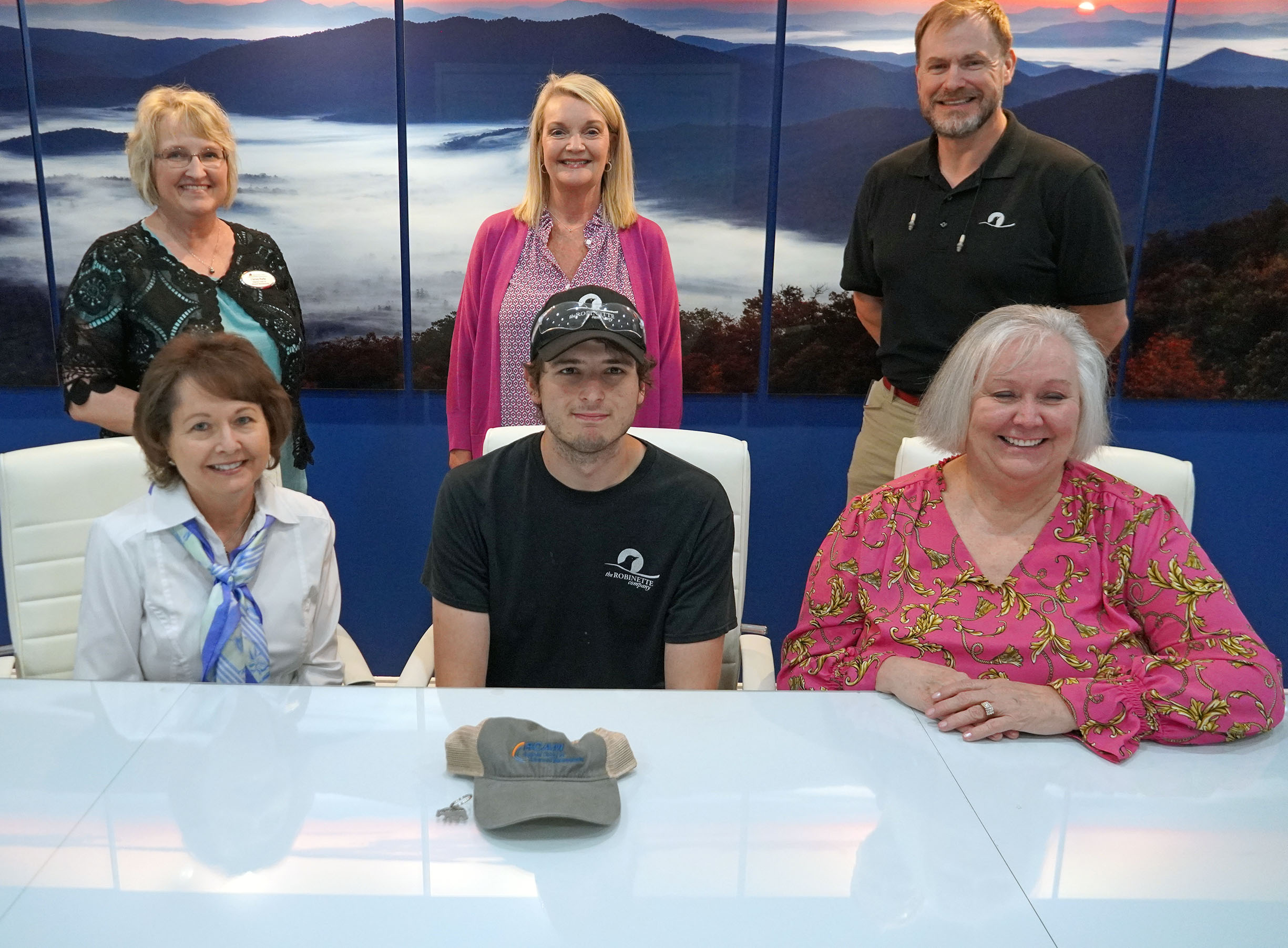
Joshua Nelson commits to a one-year apprenticeship through J.A. Street. Pictured behind Nelson (from left to right) includes Greg Williams, Christy Parks, Marcus Wilcox, Cindy Necessary, and Blake Montgomery.
New apprentices Nathan Stonecipher and Paul Townsend.

Northeast State passed an impressive milestone this spring with 100 apprentices now registered through the Regional Center for Advanced Manufacturing.
“This model invests in employees by providing an opportunity for upskilling with a progressive wage,” said Holly Free-Ollard, Vice President of Economic and Workforce Development at Northeast State. “In turn, the benefit for the company is retaining employees.”
Northeast State worked with the U.S. Department of Labor (DOL) Office of Apprenticeship to establish the Registered Apprenticeship program in 2017. The apprenticeship program unites the College’s technical education resources with regional economic development.
As the apprenticeship sponsor, RCAM provides the academic structure and training processes for employers to take advantage of this workforce development model. The partners include the following regional companies and organizations:
Bell
Bristol City Schools
CAM Industrial LLC
Cardinal Glass FG
Carter County Schools
ebm-papst Inc.
Fiber Innovation Technology
GRC
HDK Industries, Inc.
JA Street
Johnson County Schools
LeClerc Foods Inc.
Cerdia (formerly Primester)
Seaman Corporation
Silgan Closures
SKF
Snap-on
State of Franklin Healthcare Associates
the Robinette Company
Holston Medical Group PC
GSM Engineered Fabrics
The apprenticeship model uses a flexible hands-on-training structure. Apprentice candidates have a current job at a partnering organization. Those candidates are paid for learning a new skill set or an advanced skills set.
Donna Tate, senior human resources manager with the Seaman Corporation, praised RCAM staff and instructors for their dedication to meet the company’s needs in a variety of training fields.
“In the economy that we have today, it’s very beneficial to have technical training to help support the businesses and manufacturers we have in the region,” said Tate. “RCAM has been so beneficial; they meet your needs and work with you to create the training programs needed to support businesses throughout the region.”
The apprenticeship models are as diverse as the companies with whom Northeast State serves. Apprentices have entered learning pathways including mechatronics (a combination of electrical and mechanical technology); mechanical maintenance; carpentry; CNC machining; metal buildings; project management; maintenance technician; clinical certified medical assistant; teacher aide; lithographic press operator.
Occupations scheduled to be added are fiber optic technician, maintenance technician, phlebotomy, and logistics specialist. All registered apprenticeship programs and occupations must be approved through Tennessee Office of Apprenticeship and/or the U.S. Department of Labor.
As the apprenticeship sponsor, RCAM provides the academic structure and training processes for employers. When completing all courses and on-the-job training hours, apprentices receive a DOL certificate of completion.
Joseph Oliver, of the Seaman Corporation, explained how RCAM faculty provided apprentices with the technical knowledge they carried over into their on-the-job training experiences.
“You’re gaining a skill set attending RCAM and gaining knowledge from technicians and people who have been in the field,” said Oliver, “They’re giving insight and a personal angle into how to go about certain jobs and troubleshoot.”
Apprentices develop a thorough knowledge base in their field. Apprenticeships often provide opportunities for networking and building relationships within the industry, which can be invaluable for future career growth.
Oliver noted the small class sizes and camaraderie built with fellow apprentices were effective components of the learning process. A Seaman associate for more than 17 years, he encouraged individuals to pursue the apprenticeship pathway to maximize their career opportunities.
“Take that leap, get acquainted, and know what your options are,” he said. “The only thing standing in the way is you.”
Share this:
Like this: